Should I Repair or Replace my Furnace?
Deciding whether to repair or replace your furnace is one of the most common questions homeowners face, and there isn’t a one-size-fits-all answer. In our experience, the decision often leans toward repair unless your outdoor cooling equipment is also being replaced.
Here’s why, and what you should know to choose the right path.
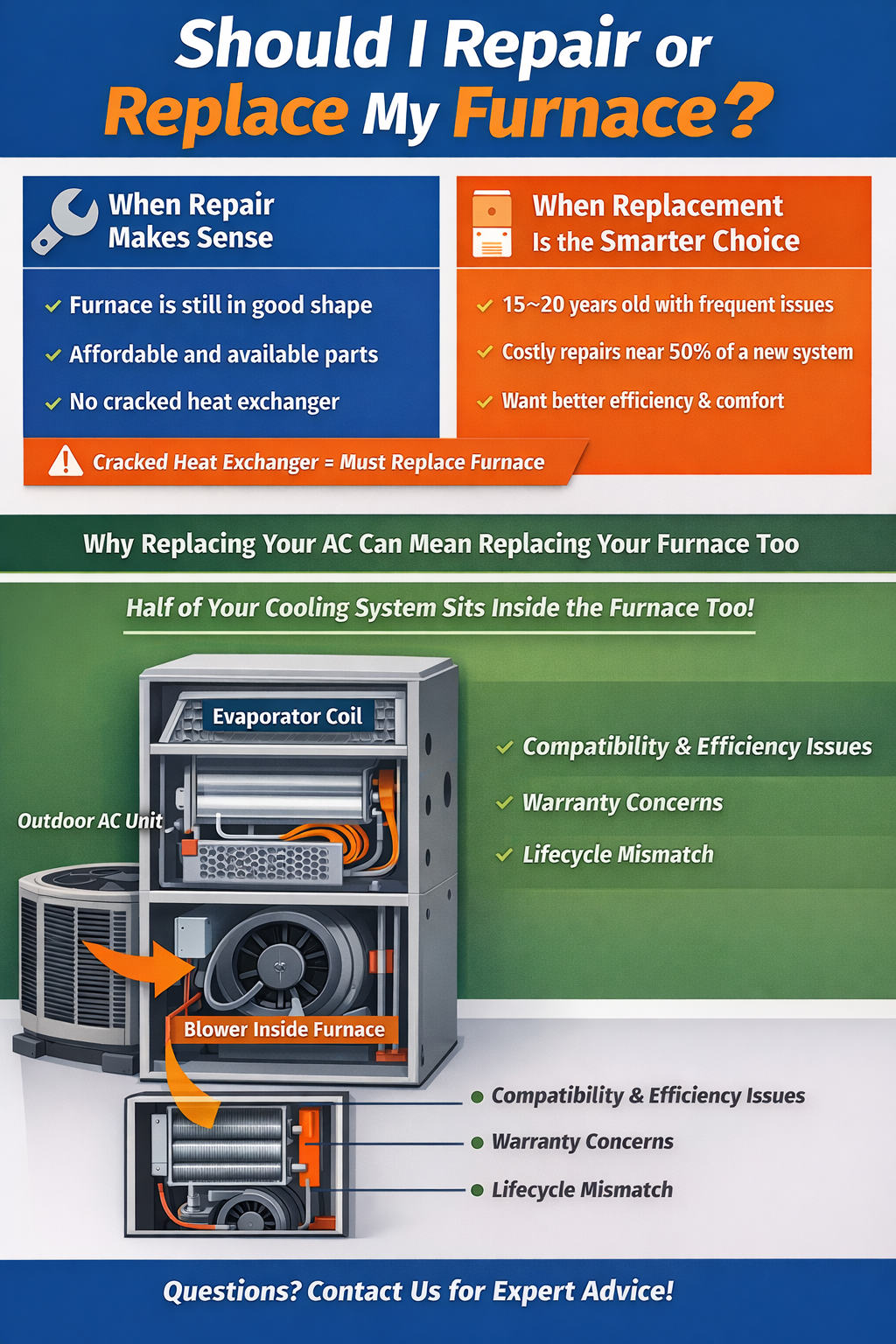
When Repair Makes Sense
Many furnaces, even those 25 years or older, can typically be repaired at an affordable cost. Their repair parts can still be found in many cases, as companies like Honeywell have created “universal” circuit boards and other key components that work for this application.
As long as the system is functioning safely and effectively, repairing it can be the most cost-effective option, especially if the furnace has plenty of life left and isn’t showing major issues.
Important safety note: Coming across a cracked heat exchanger is not just a performance issue, it’s a safety concern. Cracks can allow combustion gases (including carbon monoxide) to mix with your indoor air. In cases like this, the furnace must be replaced, not repaired.
For less severe issues (like blower motors, control boards, or minor component failures), furnace repair costs are much lower than replacing the entire system.
When Replacement Is the Smarter Choice
There are several indicators that replacement may be the better long-term investment:
1. Age and Remaining Life
Most furnaces have a lifespan of around 15–20 years. If your system is well past that range and is needing frequent repairs or has a refrigerant leak in the evaporator, replacement is often more cost-effective than continuing to fix and diagnose individual components.
2. Costly Repairs
If the furnace repair costs approach a significant percentage of the cost of a new system, replacement should be strongly considered. Guidelines like the “50% rule, where replacement makes more sense if a repair would cost more than 50% of a new unit, can help frame the decision.
3. Efficiency and Comfort
Newer furnaces operate far more efficiently than older units. A high-efficiency furnace (95% AFUE or higher) can cut heating costs and improve indoor comfort.
Why Replacing Your AC Can Mean Replacing Your Furnace Too
Many homeowners don’t realize that in a central HVAC system, nearly half of the cooling equipment lives “inside the furnace cabinet”. Namely, the evaporator coil and the blower assembly. The outdoor condensing unit and the indoor furnace share this internal coil and blower to circulate air through your home’s ducts.
So when you replace just the outdoor AC condenser but leave the old furnace and coil in place, you can run into several issues:
Compatibility & efficiency problems: A new high-efficiency AC may not operate at full potential if paired with an older blower, coil, or furnace design that can’t handle its airflow requirements.
Warranty concerns: Some manufacturers require matched systems to maintain warranty coverage — mixing old and new equipment can sometimes void parts of the warranty.
Lifecycle mismatch: Air conditioners and furnaces typically have similar lifespans (around 15–20 years). If one half fails and the other is near the end of its life, many homeowners end up replacing both soon anyway. Simultaneous replacement can save labor costs and avoid repeat service visits.
Because of these shared components, we recommend evaluating your furnace any time you are replacing your outdoor cooling equipment. It’s often more efficient and cost-effective to install a matched indoor and outdoor system rather than patching an old furnace to work with new cooling equipment.
